
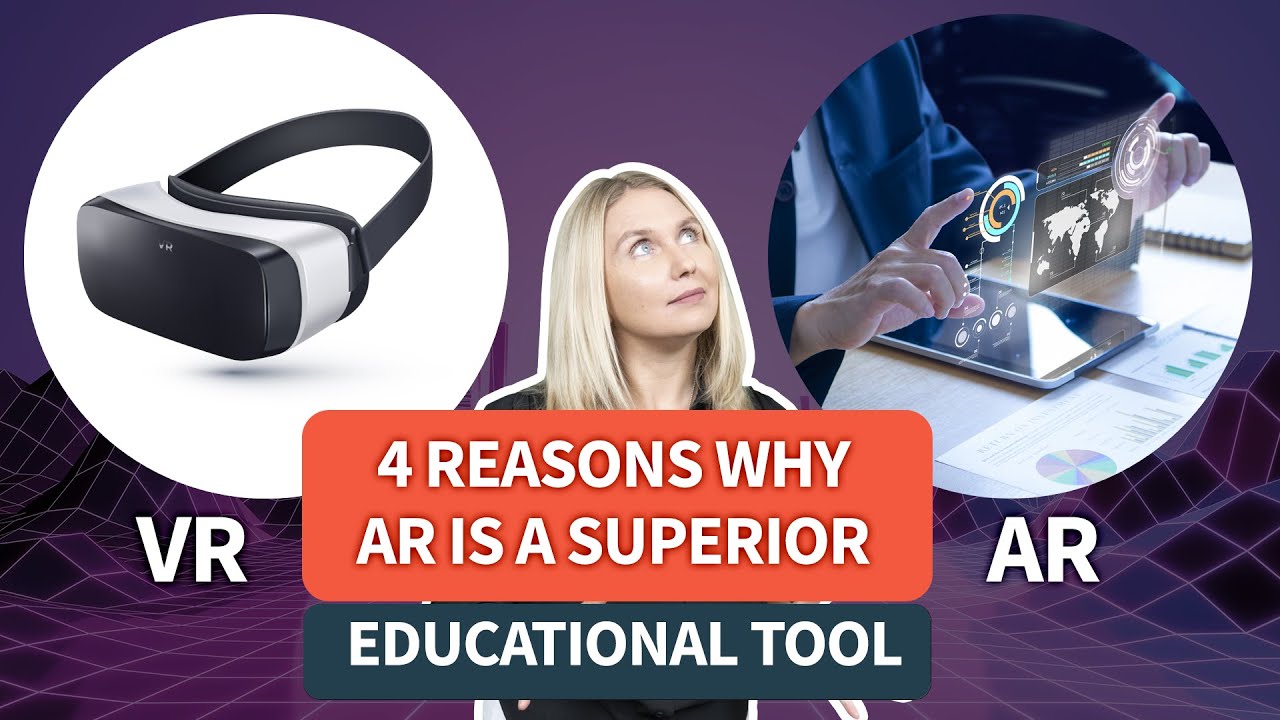
VR and augmented reality in education: the future is already here
In the world of education, we've been talking about VR for what feels like forever. But while VR (virtual reality) has dominated headlines, augmented reality (AR) has been steadily growing—and as an educator, I'm even more excited about its potential.
Hi, I'm Bianca Raby, lifelong learning nerd and EdTech enthusiast. And today, I'm diving into the possibilities that VR and augmented reality have in the education space.
Prefer to watch? Check out this video:
VR and augmented reality: What's the real difference?
Let's clear things up first.
VR stands for virtual reality—a fully immersive simulation you access through a headset. Think digital worlds, detached from your physical space.
Augmented reality, on the other hand, overlays digital elements—like images, animations, or data—on top of the real world via a smartphone or tablet. This is enhancing or augmenting reality, not replacing it.
Both VR and augmented reality offer exciting opportunities in education, but how they do so is very different.
Why augmented reality might be even more exciting for education than VR
Back in July 2016, augmented reality took the world by storm thanks to Pokémon Go. Millions of people, young and old, roamed their neighbourhoods chasing virtual creatures through their phone screens. That was augmented reality in action—and its power to captivate was undeniable.
Now imagine applying that same level of engagement to education. Here's a few benefits I can think of:
- AR requires no special equipment. Most students already have the only tool they need—a smartphone.
- It promotes collaboration. Unlike VR, which can be isolating, augmented reality encourages group work and social interaction in the physical world.
- It enhances—not escapes—reality. Students stay grounded while interacting with new layers of information and imagery in their true education environment.
- It's backed by research. Studies show that augmented reality increases learner motivation, satisfaction, attention, and overall achievement in education.
VR still has a role in education—but it's not the whole story
Make no mistake—VR is still a powerful tool. In education, it's great for scenarios that require full immersion, like virtual labs or historical recreations. But its accessibility challenges—costly headsets, isolation, and technical barriers—mean it's not yet a daily classroom staple.
Augmented reality, however, is already being used effectively across education sectors. From anatomy overlays in medical training to interactive museum guides, its integration into education is only accelerating.
VR and augmented reality in education: A combined future
It doesn't have to be one or the other. In fact, the best future for education may involve combining VR and augmented reality, using each where it shines most.
I'd love to hear your thoughts—have you seen a great example of augmented reality in the classroom? Or maybe a creative use of VR in an education setting?
Until next time, stay curious—and stay awesome.