
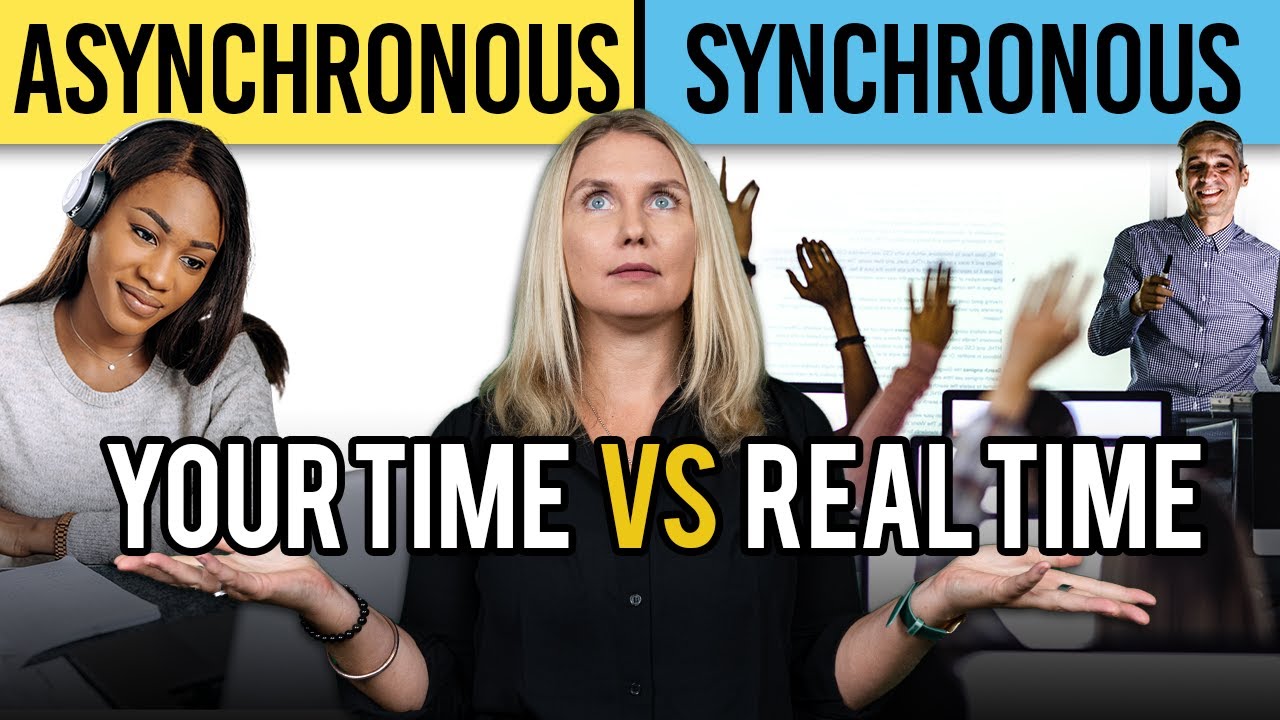
Synchronous vs asynchronous learning: a foundation of Learning Design and eLearning
A synchronous learner and an asynchronous learner walk into a bar. The synchronous learner says, "Let's drink together—right now!" The asynchronous learner replies, "Leave mine here. I'll sip when it suits me." Cue the bartender: "How about a blended cocktail to suit you both?" Okay, I know—I'm Bianca Raby, Learning Design nerd and wannabe comedian. But jokes aside, understanding synchronous vs asynchronous learning is essential if you're designing effective eLearning experiences. Let's unpack this key piece of learning terminology, especially if you're new to Learning Design or wrestling with how to balance your delivery model.
Synchronous vs asynchronous learning: what's the difference?
In eLearning, these two terms define how your learners engage with content—and when.
- Synchronous learning happens in real time. Whether in a classroom or on Zoom, it's all about interaction. Think live workshops, Q&As, or collaborative activities. It supports skills-based and attitude-shifting outcomes because learners and facilitators engage directly.
- Asynchronous learning is flexible and self-paced. Learners watch videos, complete quizzes, and access resources when it works for them. It shines in knowledge-building and supports adult learners juggling busy schedules.
The difference between synchronous vs asynchronous learning is more than timing—it's about learner autonomy, access, and how Learning Design scaffolds engagement.
Why it matters in eLearning and Learning Design
If you're an eLearning creator or educator, here's why you need to understand synchronous vs asynchronous learning:
- You can't just repurpose a live lecture for online delivery. That's poor Learning Design.
- Asynchronous content should be crafted intentionally—not just recordings of Zoom calls.
- Synchronous sessions should never be passive. They should build on pre-learned content and create social learning opportunities.
In other words, live time should be used for interaction. Save the info-dumps for the asynchronous components. Great Learning Design knows the difference—and designs accordingly.
eLearning success: blending the two
The sweet spot? A blend.
Synchronous vs asynchronous learning isn't an either/or. The best eLearning solutions combine both:
- Asynchronous modules for flexibility and foundational knowledge.
- Synchronous sessions for collaboration and application.
This blended approach reflects the evolving nature of Learning Design. And let's be honest—it meets learners where they're at. Especially when your audience spans time zones, life stages, and learning preferences.
Final sip of truth
Designing for synchronous and asynchronous learning isn't about ticking boxes—it's about crafting meaningful, flexible, and high-impact eLearning. Asynchronous modules demand thoughtful Learning Design. Synchronous moments need to be purposeful, not just scheduled.
So... what's your experience been? Which model do you prefer in your eLearning journey?
Share this with someone still confusing Zoom recordings with real Learning Design.
Until next time—stay awesome, stay strategic, and keep building smarter eLearning.