
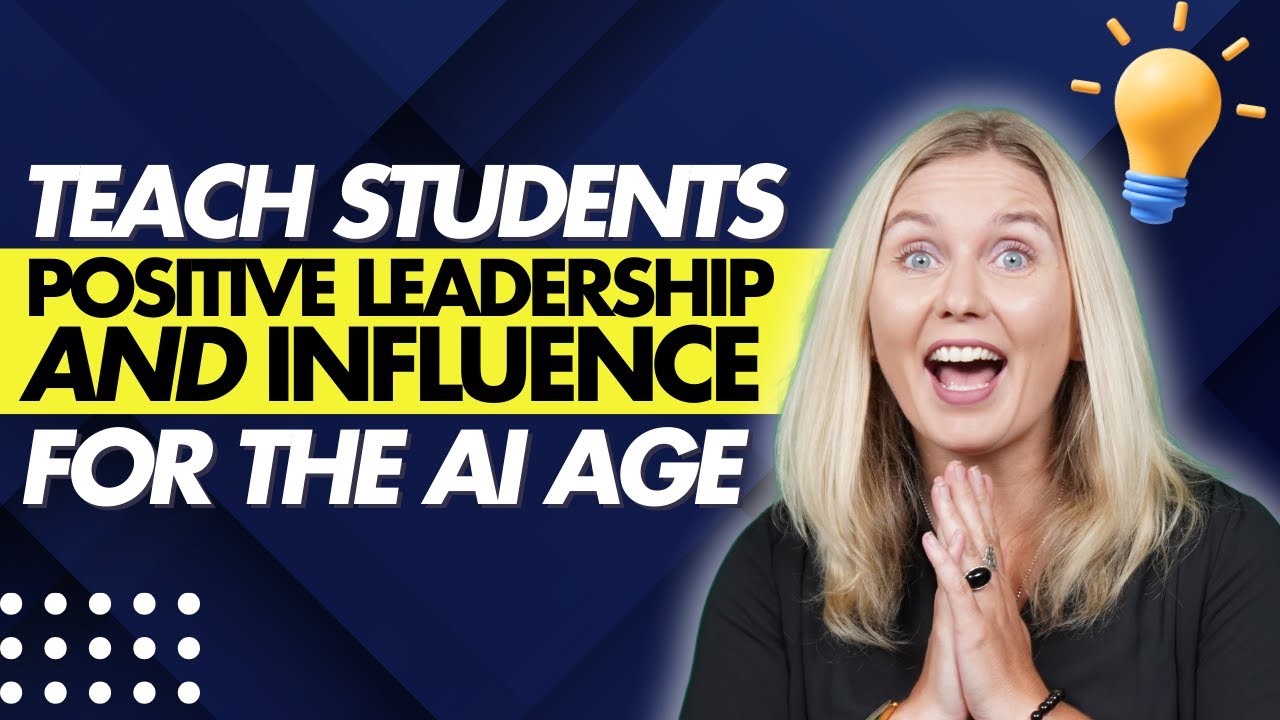
Teaching leadership and social influence: essential skills for the future of education
Are you overwhelmed by all the talk about “future-ready” skills, yet feel like the system just can’t keep up? You’re not alone, and you’re definitely not powerless. Welcome to our series exploring top skills for the future of education. Today, we’re zooming in on two deeply human (and wildly undervalued) skills: leadership and social influence. I’m Bianca Raby, CEO of Oppida, former K–12 teacher, and champion of all things Learning Design. I also have a Youtube channel where I post videos, like the one below. Thanks for being here.
Why leadership and social influence matter more than ever
In today’s hybrid, tech-saturated world, leadership isn’t just about titles—it’s about empathy, adaptability, and clear communication. And social influence? That’s the secret sauce. It’s the ability to move hearts and minds, to inspire change, and to build trust in the digital age.
These two skills are closely intertwined. Strong leadership depends on the ability to engage and influence others. And impactful social influence draws its power from authentic, values-driven leadership.
Crucially, neither leadership or social influence can be automated. They are uniquely human and utterly essential in the future of education.
3 AI-proof assessment strategies for leadership and social influence
To teach these skills well, we need to start with how we assess them. Here are three AI proof approaches rooted in authentic Learning Design for the future of education.
1. Peer-led group projects
The task: Assign rotating project leadership roles. Each student guides their team to a shared goal while managing tasks and communication.
The assessment: Use self and peer evaluations to reflect on their leadership performance, highlighting empathy, delegation, and social influence.
2. Student-driven discussions
The task: Let students practise leadership by presenting or facilitating a class discussion on a topic they’re passionate about.
The assessment: Evaluate how they influence their peers through structured communication, persuasion, and facilitation—core indicators of both leadership and social influence.
3. Leadership simulation
The task: Drop students into a fast-paced scenario, like coordinating a virtual event with tech issues or leading a team through a crisis.
The assessment: Focus on adaptability, decision-making, and their ability to rally the group. Include a post-task debrief to reflect on leadership strategies and social influence impact.
Leadership and social influence are non-negotiable in the future of education
As we embrace AI in the future of education, these human-centered skills become even more essential. Leadership and social influence are not just workplace buzzwords, they’re the bedrock of collaboration, trust, and meaningful change.
Want to future-proof your teaching practice? Start designing learning experiences that empower students to lead, connect, and influence.
So…What have you been doing to build these skills in your students? Let’s share what’s working.
Until next time, stay awesome.