
AI in education and the future of education. What a Greek disco night taught me about change
In July 2023, I found myself on the island of Crete, floppy sunhat and all, enjoying a much-needed break. One morning, a flyer landed on our balcony: "Disco Night at the Elounda Ilion Hotel." It was decked out in clip art that transported me straight back to the early 2000s—pure nostalgia. Why do I start a piece about AI in education and the future of education with a story about disco and clip art? Because that flyer reminded me of something crucial: even as technology leaps forward, people—and institutions—change slowly. That's the lens I'm using to unpack why AI might not completely revolutionise schools within the next decade, despite the hype.
As I didn't introduce myself, I'm Bianca Raby. Teacher, turned Learning Designer, turned CEO. I also make videos like this one below.
AI in education is powerful, but humans still run the show
I've built a career around promoting change in education and advocating for the evolving role of teachers in a tech-driven world. And yes, I believe AI in education is one of the most significant leaps since the internet. But let's get real—the future of education won't arrive overnight. Why? Because humans are still human. And most of us resist change.
Even in 2022, nearly half of Australian students lacked access to adequate tech for school. Meanwhile, billions are spent globally on education, but only a small fraction goes toward edtech innovation or AI in education tools. Most budgets still lean heavily toward buildings and salaries.
The future of education: still rows of desks?
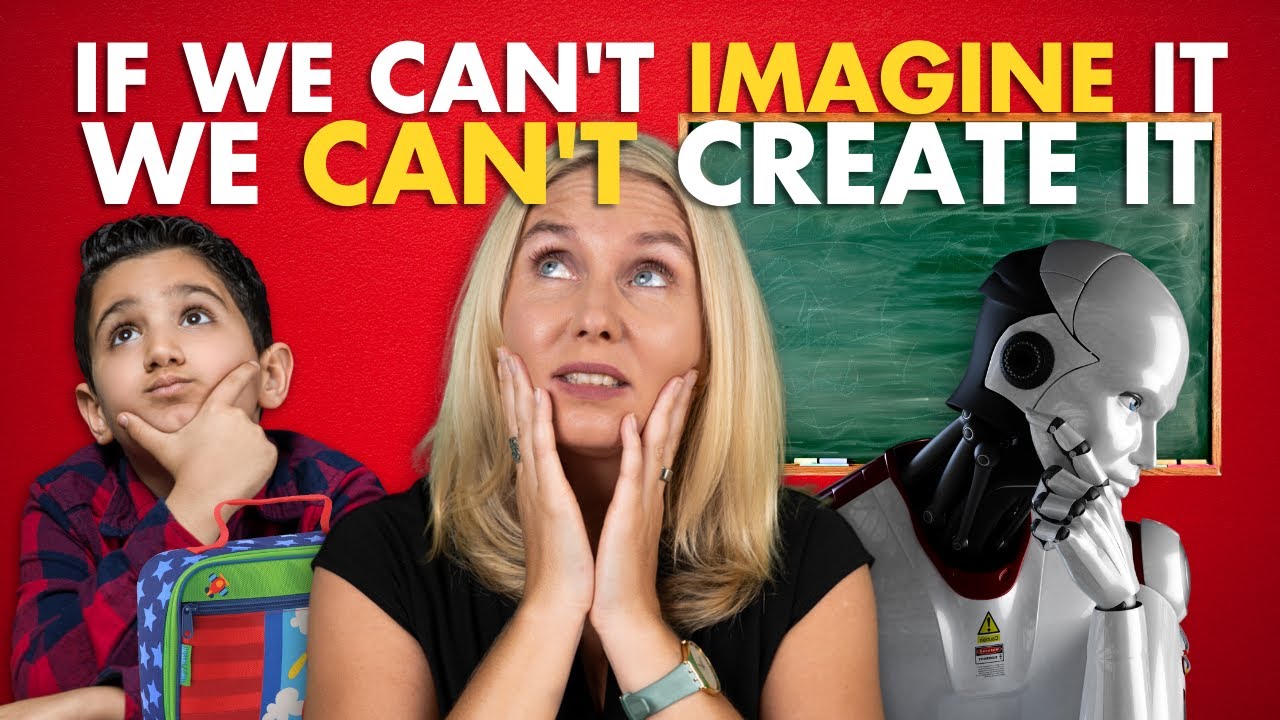
Think back to The Jetsons. Sure, they got video calls and online learning right. But the classroom? Still rows of kids, a teacher, and a whiteboard. Despite all our imagination around AI, our vision for the future of education is shockingly stale.
Even the most innovative school models often still rely on the physical arrival of students, state-mandated curriculum, and a standardised system that leaves little room for truly personalised learning powered by AI. Unless the model shifts fundamentally, not much else will either.
Where AI in education can actually make a difference
Here's the good news: AI in education can enhance the learning experience, even within existing frameworks. Smart teachers are already using AI tools to personalise feedback, create content, and streamline admin. Private AI models are being explored by universities to support student learning without compromising data integrity.
But widespread transformation? That's a whole different beast. It's likely to come from outside the system—perhaps parents demanding change, or startups creating entirely new school models. Until then, clip art-level innovation may be the pace we're stuck with.
What now? A call to dream bigger about AI and the future of education
So, what do you think the classroom of 2034 will look like? Will AI in education finally push us into a new era, or will the future of education still look eerily like the past?
This conversation matters. And not because I want to bash the system—I deeply respect the incredible teachers and schools changing lives every day. But if we want real change, we need more imagination. We need to dream up school models that don't start with bells and end with report cards.
I'll leave you with this: technology will keep advancing. But unless we shift our thinking about education, AI will just be a shiny add-on, not a true transformation.
Let's keep this conversation going.
Until next time, stay awesome—and maybe rethink that disco flyer.