
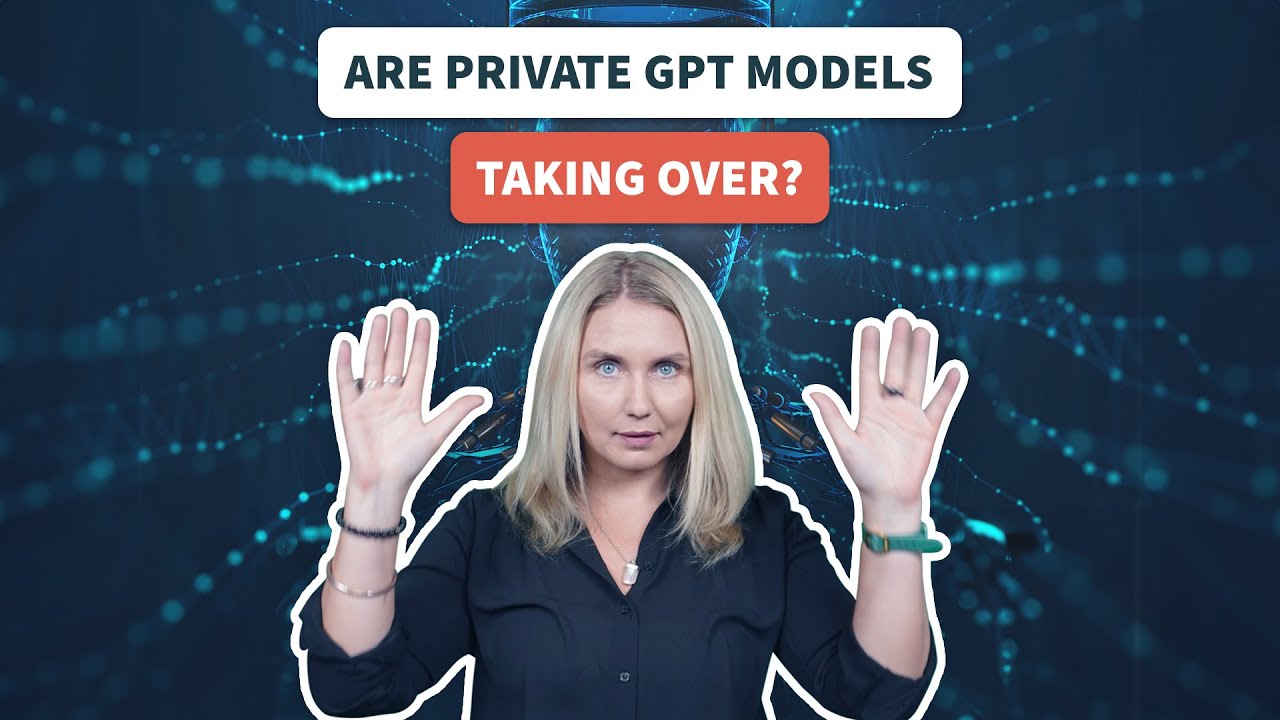
AI and the future of education: private GPT models, personalisation & possibility
Ever since Chat GPT burst onto the scene, the education world has been buzzing. What's next? How big is this really? Are we looking at a subtle evolution—or a complete reinvention? Let's just say, if you're still thinking of AI as a futuristic add-on, it's time to reframe.
Hi, I'm Bianca Raby—educator, edtech CEO, and cautiously optimistic AI explorer. Recently, at an education summit hosted by Microsoft, some game-changing insights were shared, particularly around the concept of private GPT models. Yes, GPT and education are getting personal—and that's where things get very exciting.
Private GPTs and personalised education
Let's start with the basics: private GPT models. These are not your average bots. Private GPT allows education institutions to train AI using their own data—curated content that stays on local systems. This means more control, better context, and fewer question marks around data privacy.
Think about it: instead of a student asking a publicly trained AI assistant, "What's the cause of World War I?" and getting a slightly generic answer, a private GPT could respond using the school's own curriculum, references, and even past lectures. That's a tailored, reliable learning experience—one where AI enhances rather than overrides the traditional education system.
In the grand conversation about AI in education, this private GPT approach could offer the perfect balance: innovation with integrity.
Humans still matter—big time
Despite the hype, one truth remains: AI in education is not a solo act. These GPT models still need human oversight. Who controls the training and education data? Who ensures ethical use? Who makes sure students aren't just passively consuming AI content?
This is where the concept of data sovereignty comes in. In education, we need to be laser-focused on who owns and governs the data that fuels our AI tools. With global GPT models (like Chat GPT) pulling from the entire internet—including the dodgy corners—private GPTs in education offer a way to mitigate risks like bias, misinformation, or inappropriate content.
AI hallucinations, GPT temperature, and smarter tools
But let's talk about one of the elephants in the room: AI hallucinations. Yep, GPT models sometimes just… make stuff up. Even private models in education aren't immune. The key to reducing these? It's called temperature control.
A lower temperature (say 0.5) makes a GPT response more focused, ideal for academic settings. A higher one (like 1.5) gets creative—fun for brainstorming, risky for facts. In education, fine-tuning this balance is part of the art of building responsible AI experiences.
Socratic AI: the GPT that helps you think
Here's where it gets fun. Imagine a world where students don't just use GPT—they talk to it. Not in a "tell me the answer" way, but more like a smart study partner who helps them reason, reflect, and refine their thinking.
This is the future of education with AI: not spoon-feeding but sparking deeper learning. And for high-achieving students—or those without strong peer support—this could be a true game-changer in their education.
But remember, this future hinges on collaboration. We need everyone in the education system, teachers, instructional designers, and AI engineers working together. It's not just about the tech—it's about learning that sticks.
What's next for AI, GPT models and education?
So where do we go from here? Private GPT models offer a solution to data concerns. Smart AI prompts combined with well-curated Learning Design can unlock new dimensions of personalised education. But we must proceed thoughtfully, always asking: Does this serve the learner?
We're at a crossroads where education, AI, and GPT intersect in powerful ways. The decisions we make now—about governance, ethics, and design—will shape the classroom of the future.
What do you think? Can you see private GPT models transforming how we teach and learn in our education system? Are the risks worth the rewards?
If you're curious to dive deeper, check out my video on plagiarism in the AI age. Let's keep learning, questioning, and designing the future of education together.
Until next time, stay awesome—and AI-aware.