
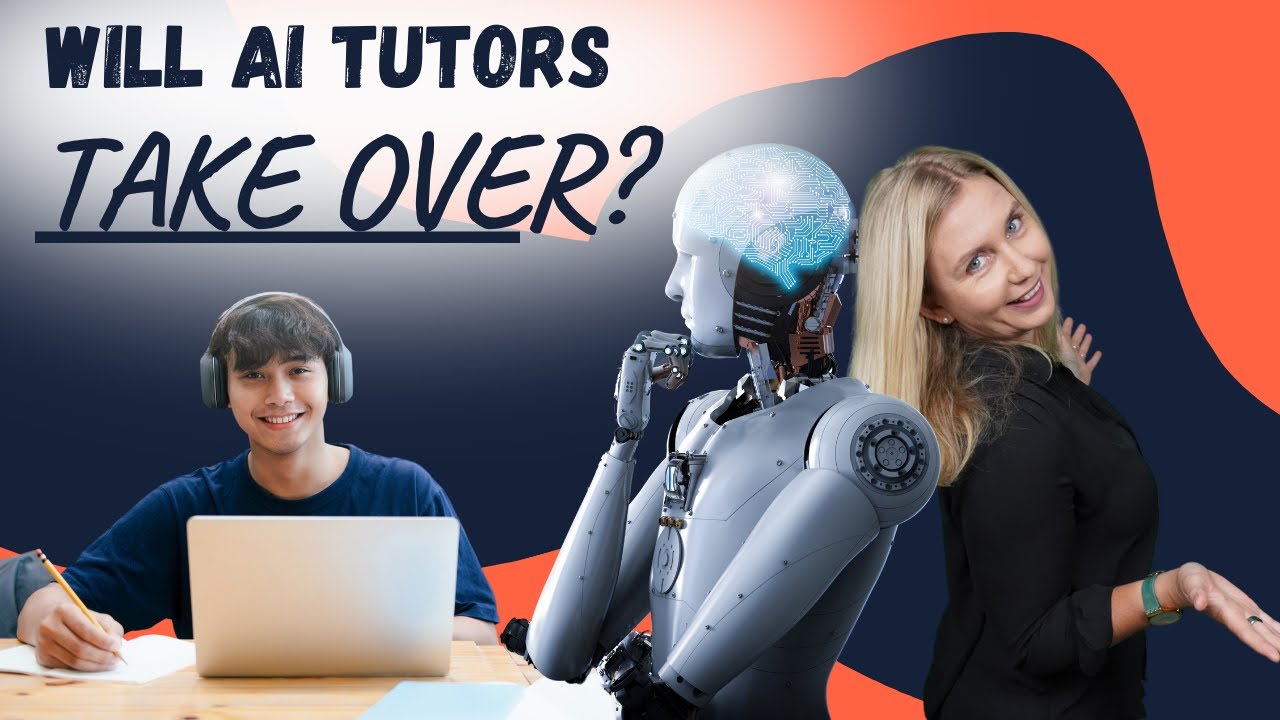
Can ChatGPT be an AI tutor? Exploring the role of AI in education
Hi everyone, Bianca here. Today we're diving into a question I love: Can ChatGPT-4 actually function as a real AI tutor? And just how good is it? Since the early days of AI tools like ChatGPT, one of the most exciting promises has been their potential in education—specifically, as powerful, scalable AI tutors. As a former teacher, I remember the guilt of never having enough one-on-one time with each student. Foundational skills like reading and arithmetic often get rushed in a group setting. That's where the dream of a reliable AI in education starts for me.
Sal Khan and the Two Sigma promise of AI in education
Sal Khan—yes, that Khan Academy Sal—has been chasing this vision for years. In his recent TED Talk, he breaks down the "Two Sigma Problem," which showed that one-on-one tutoring could improve a student's performance by two whole standard deviations.
Let that sink in. A decent student can become excellent with just personalised attention. That's why so many of us are excited about AI in education—because a scalable AI tutor could offer that personalised support, 24/7.
Khanmingo and the rise of purpose-built AI tutors
Enter Khanmigo—Khan Academy's AI-powered tutor, built on ChatGPT-4. What's impressive is that this AI tutor doesn't just give students answers. It guides them, asking probing questions and prompting them to think critically.
In demos, Khan's own son uses the bot to work through a maths problem. The AI tutor supports his reasoning without doing the thinking for him—just like an ideal tutor would. This is exactly the kind of AI in education we've been hoping for: thoughtful, ethical, and student-centred.
Limitations of AI tutors (and why teachers still matter)
Now, let's be clear: even the best AI tutor still lacks the nuanced understanding of a human teacher. For example, ChatGPT occasionally teaches two concepts at once instead of isolating a missing skill. That's where a skilled teacher would step in—reframing, adjusting, and responding to the learner's emotional cues.
But here's the point: AI in education doesn't need to replace teachers. It's an accelerant. The AI tutor gives a child repetition, reinforcement, and low-pressure practice. And let's be honest—when was the last time you had time to create six new practice questions on the spot?
Why AI tutors are a win for Learning Design
From a Learning Design perspective, this is gold. A well-programmed AI tutor fits right into a learner's ZPD (Zone of Proximal Development), offering timely nudges without overstepping. That's smart AI in education—and it's already happening.
So, yes, I'm a fan. I think we're witnessing a leap forward in AI tutor potential—and in what's possible for equity and access in education.
Have you used an AI tutor? Stay tuned for more deep dives into the future of AI in education.
Until next time, stay awesome.