
AI in education. Is AI plagiarism the real problem? Or are we missing the point?
Let's talk about the elephant in the staffroom: AI in education. More specifically, AI plagiarism. It's the phrase that's launched a thousand faculty meetings—and a fair bit of moral panic. But here's a question worth sitting with: Is using AI really plagiarism, or are we clinging to outdated notions of learning?
Hi, I'm Bianca Raby, and I've got a controversial take that might ruffle a few feathers: we need to stop worrying so much about students using AI in education for their assessments. Yep, I said it.
Of course, I'm not excusing the kind of AI plagiarism where someone literally copies and pastes an AI-generated essay and pretends it's their own. That's not cool, and honestly, it's just lazy. But asking a Large Language Model like ChatGPT to summarise a dense article or generate a draft outline? That's not cheating. That's smart learning strategy.
The shifting landscape of AI plagiarism
Plagiarism used to be easy to spot. Now, with AI in education becoming mainstream, the boundaries are blurrier. Some argue that using AI tools bypasses the "hard work" of thinking. But who decides what counts as hard work?
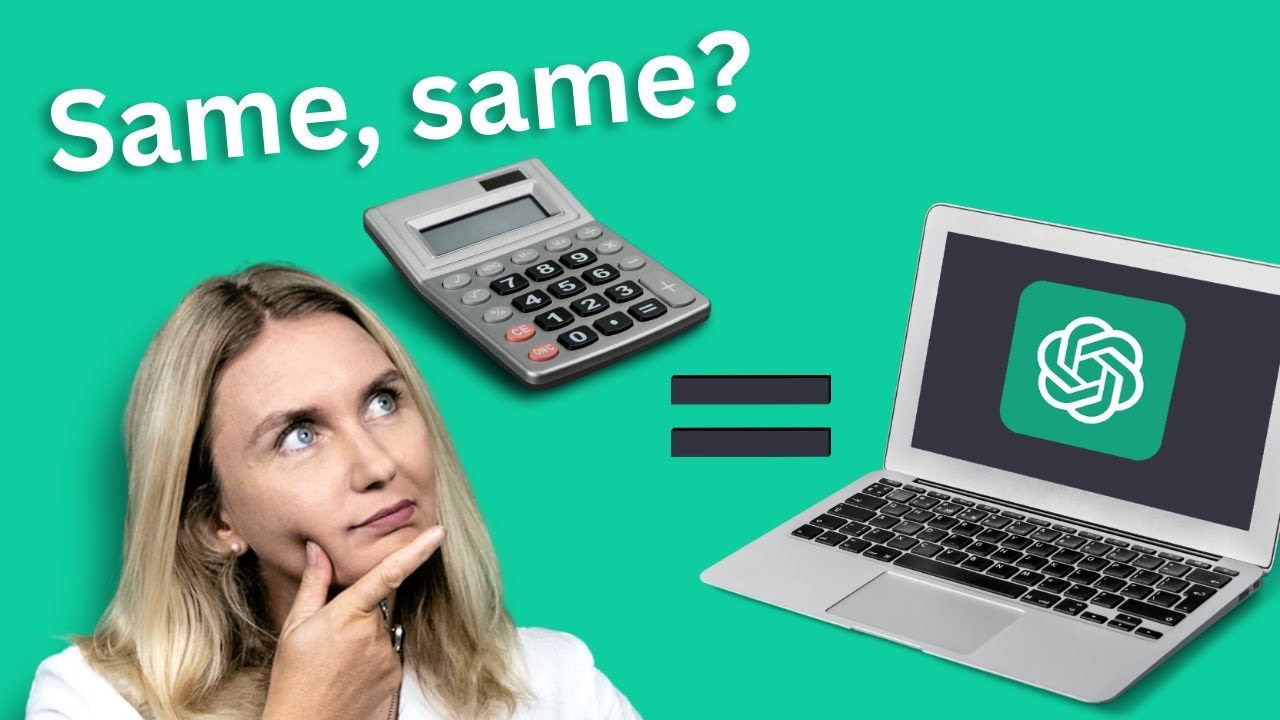
Back in the day, people thought calculators would ruin maths education. Turns out, they just helped us tackle more complex problems. The same applies to AI. Used well, it frees up brain space for deeper thinking. So if a student uses AI to organise ideas, synthesise research, or improve clarity—where exactly is the line of AI plagiarism?
Let's also not ignore that cheating in schools isn't new. What's changing is the toolkit, not the motivation. Humans, especially teenagers, have a knack for finding shortcuts. Always have. Always will. But the solution isn't tighter AI plagiarism detection. It's better assessment design.
Universities are starting to catch on
At first, the reaction to AI in education was predictable: panic. Enter the AI plagiarism detectors. Tools like Turnitin's AI Writing Detector were launched to sniff out student submissions that had a whiff of ChatGPT. But here's the kicker—these tools have often misfired, unfairly flagging international students whose English vocabulary may not be as robust and their English as a second language skills follow more predictive word patterns. The stakes? Academic standing, scholarships, even visas.
Now, some universities are taking a deep breath and a wiser path—ditching the AI plagiarism panic and embracing the use of AI in education. Why? Because they've realised that fighting the tech is like trying to ban Google. Instead, they're focusing on creating better, more authentic assessments.
Redefining what really matters
What if we stopped obsessing over AI plagiarism and started asking: can students…
- Communicate clearly and persuasively?
- Consider multiple perspectives?
- Back up their ideas with evidence?
- Apply learning to the real world?
These are the true markers of success in the age of AI in education.
My conclusion
AI in education isn't going anywhere. And while AI plagiarism will continue to be a hot topic, we've got a choice: spend our energy policing students or teaching them to use these tools with integrity. I vote for the latter.
So, what do you think? Is it time we reframe our fear of AI plagiarism and lean into the future of AI in education?
Until next time, stay awesome.