
AI in eLearning, and Instructional Design: when artificial intelligence belongs on camera
AI, AI, AI—who knew this would dominate every conversation this year? But here we are, asking the important questions: what are the impacts of AI in eLearning, and when does it actually improve Instructional Design?
Hi, I'm Bianca Raby—educator, learning designer, and newly converted video producer. Over the past few years, my team at Oppida and I have dived headfirst into video production, even building our own studio. But this piece isn't about lights and lenses—it's about AI, and specifically when AI in eLearning and Instructional Design mix.
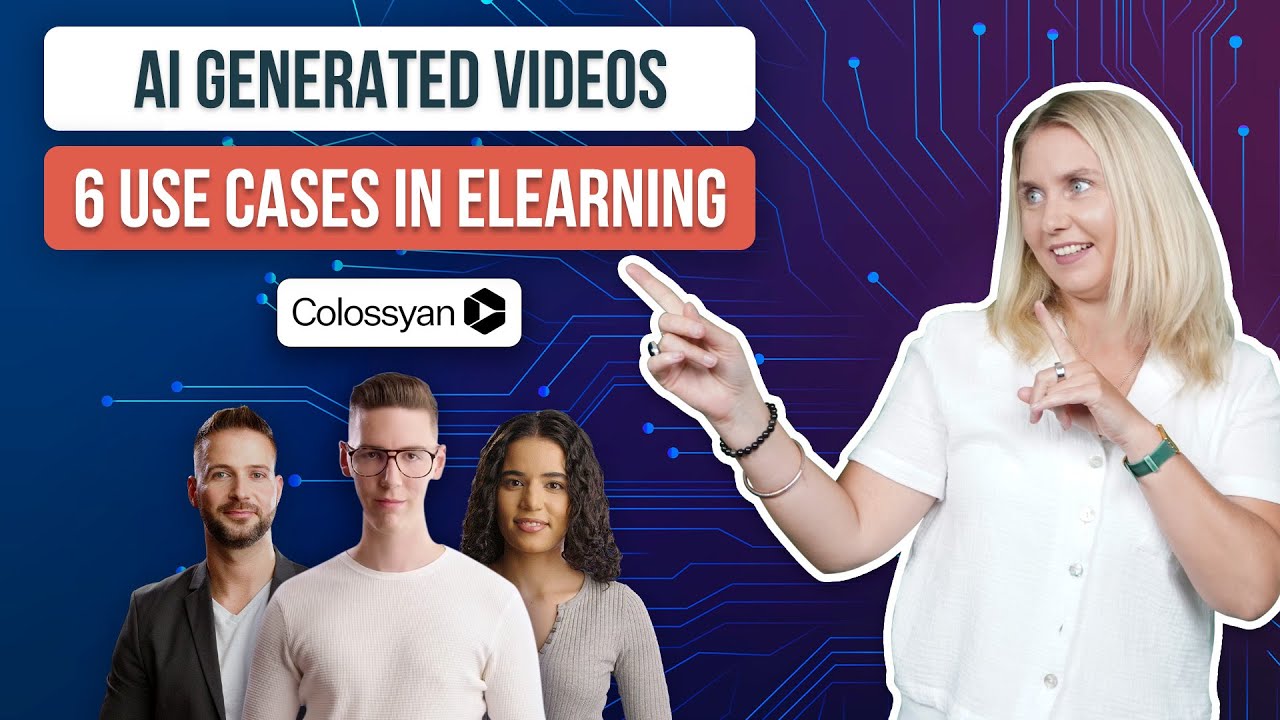
We recently tested Colossyan, an AI video generation tool, and pushed it to the limit. We compared a video of me, a human presenter, to two AI-generated versions. You can find the full breakdown in our blog, where we assessed everything using Mayer's 15 principles of multimedia learning. But here's what you need to know right now: AI in eLearning can absolutely work—if used strategically in Instructional Design.
Six situations where AI in eLearning just works
When the presenter isn't critical to the message
AI in eLearning can work well when personal connection isn't essential. In an eLearning module intro, for example, an AI avatar might be perfectly sufficient. But don't expect AI to replace human connection on YouTube or in live learning environments. Use it wisely in Instructional Design to maintain that all-important student to content connection where it matters most.
When the content is purely instructional
If you're showing students how to calculate the mean, median, and mode using a dataset, you don't need a star presenter. Using AI in eLearning to generate videos can deliver procedural knowledge efficiently—especially helpful in data-heavy or compliance-based eLearning contexts.
When the content needs to be agile
In the world of Instructional Design, agility is king. If feedback demands a change to content or data, re-recording a human-led video is costly and time-consuming. AI offers scalable flexibility to our Instructional Design projects that traditional production can't.
When deadlines are unrealistic
Let's face it—project timelines often aren't built with production reality in mind. AI video tools can help Instructional Design teams hit tight deadlines without sacrificing too much quality for the online students, particularly when content is more functional than emotionally rich.
When there's no access to a studio or presenter
Not everyone is made for the camera. And let's be real—some human-led videos can be more distracting than helpful. This is a nuanced use case for AI in eLearning. Using an AI generated presenter who speaks clearly and looks polished may actually enhance student engagement when live action isn't feasible.
When you need content in multiple languages
AI is transforming multilingual eLearning. Yes, human translation and cultural nuance still matter—but AI drastically cuts the initial workload and cost. Combine this with AI avatars that lip-sync in multiple languages, and suddenly your global audience becomes reachable in days, not months.
The future for Instructional Design
Let's be clear—this isn't about replacing humans. It's about choosing the right tool for the job. AI in eLearning won't (and shouldn't) dominate every module, but when used intentionally in Instructional Design, it can amplify reach, speed, and accessibility.
Now, over to you—what's your take? What's the biggest difference that AI in eLearning has made for you?
Until next time—stay awesome!